
VIBEX — Enterprise B2B Commerce Platform Builder
Overview
VIBEX is a scalable no-code enterprise B2B commerce platform for building and managing multiple dealer storefronts within a unified SaaS and ERP ecosystem. It transforms business complexity into a structured, rule-based system that enables consistent and scalable storefront delivery.
Categories
Enterprise UX
Platform Design
B2B Commerce
System Architecture
My Role
Led the UX architecture and template system design, defining scalable layouts, core commerce flows, and configurable element standards.
Impact
Transitioned from custom site delivery to a scalable platform model, enabling measurable improvements in efficiency, consistency, and adoption.
Impact
42%
Increase in standardized template adoption
35%
Reduction in customization & setup time
100+
Dealer storefronts supported within the unified platform
1. What is VIBEX
As B2B commerce grew increasingly complex, traditional site-by-site customization led to inconsistent experiences and rising maintenance costs.
VIBEX was designed as a unified, responsive, and rule-based platform — enabling scalable templates, standardized commerce flows, and configurable elements to support long-term business growth.
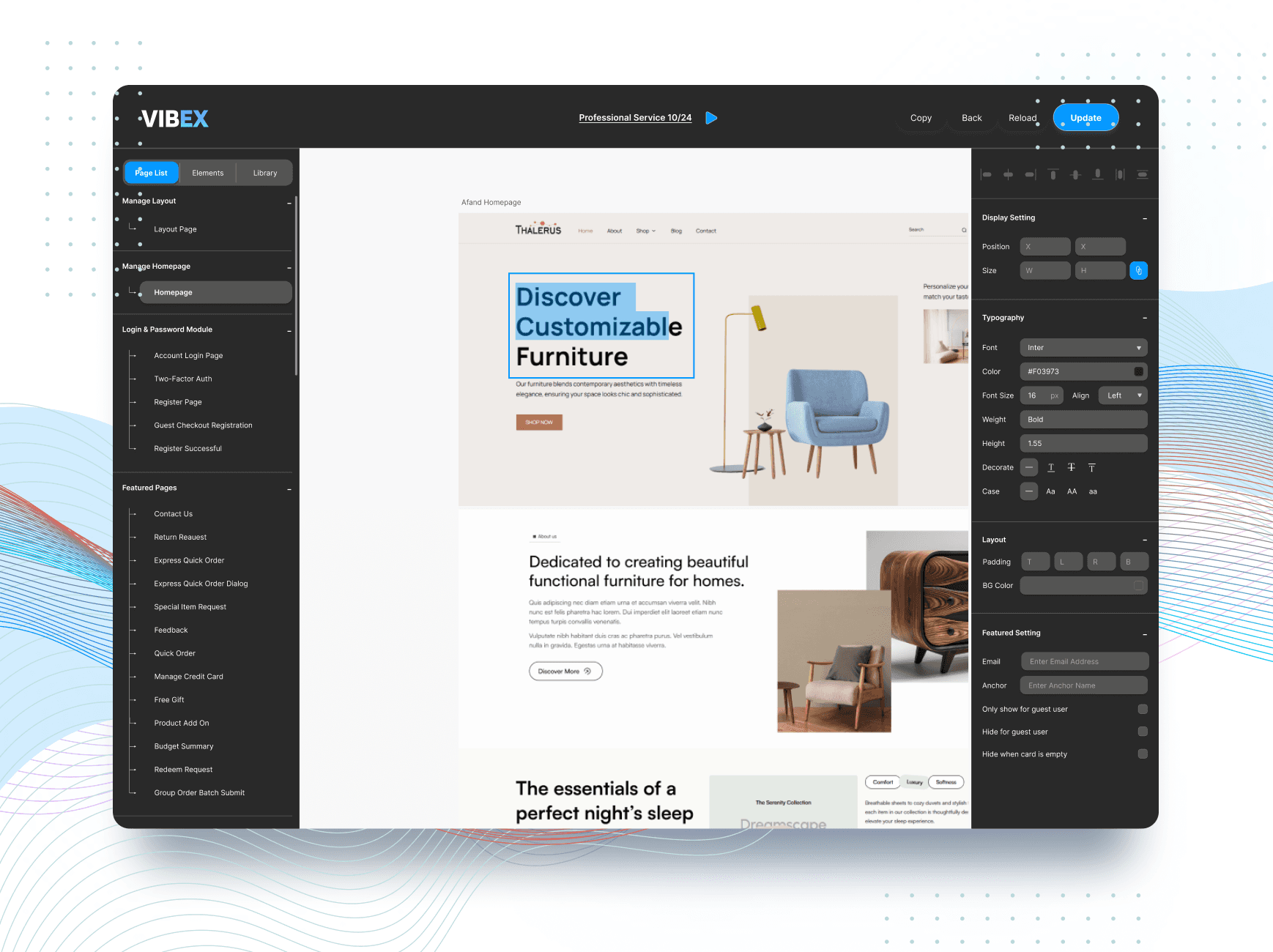


2.1 Operating Within Enterprise Reality
B2B storefronts operate on top of enterprise ERP, SaaS, and supply chain systems.
All storefront data originates from centralized business systems rather than being independently built for the web.
Independent dealers share the same backend ecosystem while maintaining their own branded storefronts.
These businesses manage inventory, pricing rules, purchasing approvals, and logistics through unified enterprise infrastructure.
2.2 Complexity at the Core
B2B commerce requirements are highly varied, with complex workflows and multiple page types.
Storefronts must accurately and controllably reflect business rules and operational data.
In a multi-dealer environment, design, engineering, delivery, and maintenance must operate within a unified structural framework.
The platform must remain flexible for dealer customization while preserving system consistency.
3. Turning Complexity into Structure
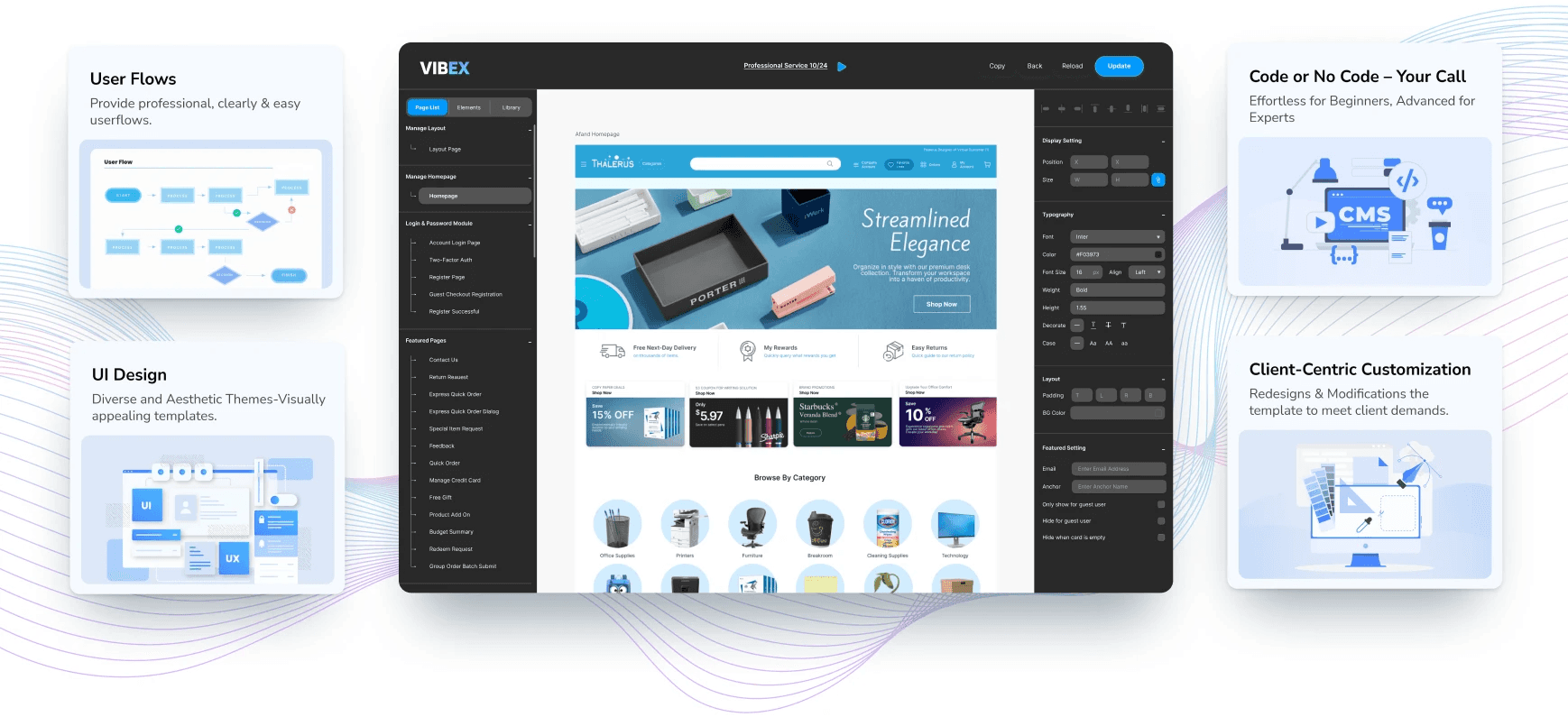
As dealer requirements grew increasingly complex, the challenge was not simply building more features — it was defining a structure that could consistently support them. Instead of responding to each request with isolated customization, the focus shifted to designing a platform capable of translating business complexity into reusable system capabilities.
Through structural abstraction and rule definition, the platform transformed scattered requirements into a coherent framework:
Translated business capabilities into structured, configurable frontend modules.
Enabled flexible storefront configuration within a unified set of business rules and page structures.
Converted one-off custom design and implementation into reusable, maintainable platform components.
Preserved system consistency and business correctness while allowing brand differentiation across dealers.
Simplified complex B2B operations into clear, manageable experiences for users and dealers.
4. How the Platform Works
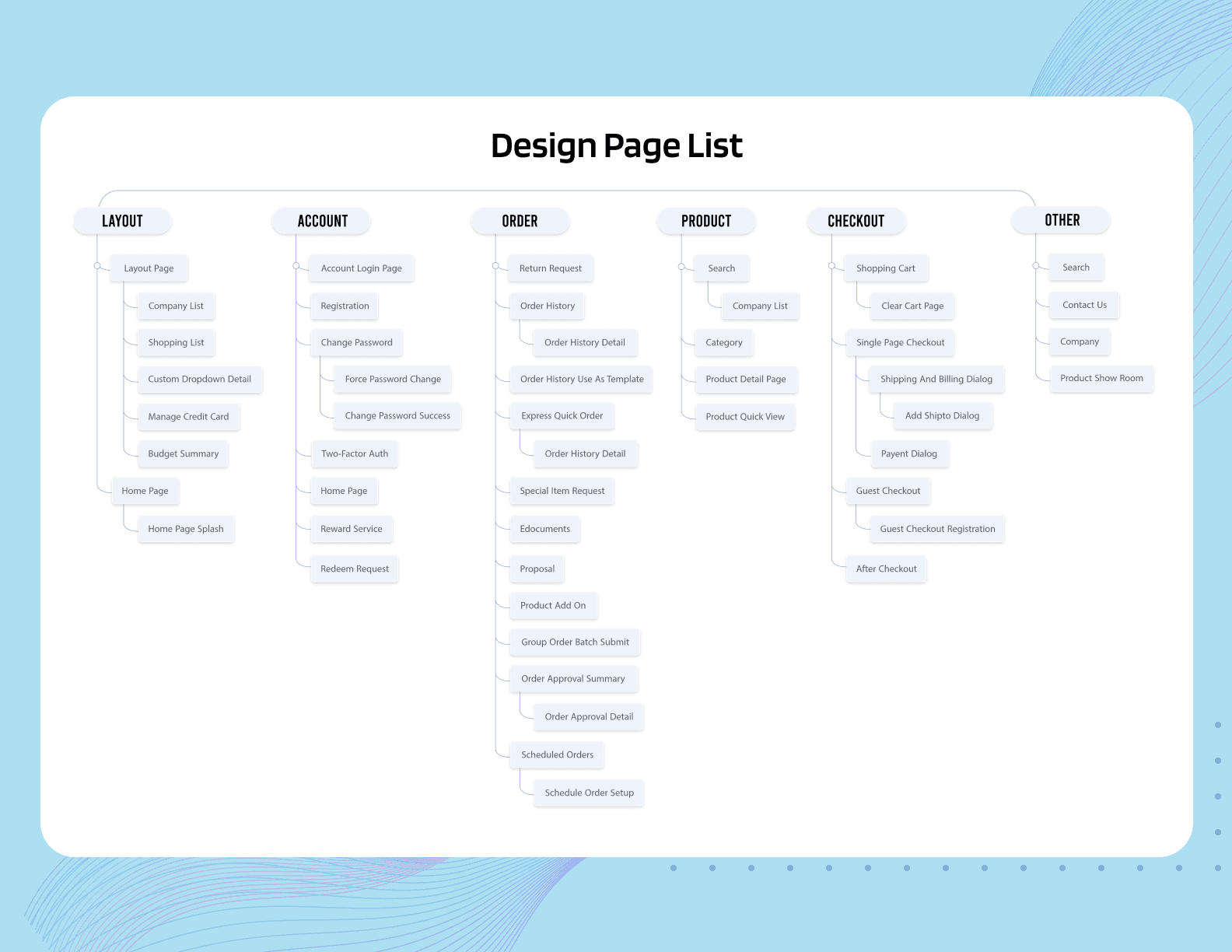
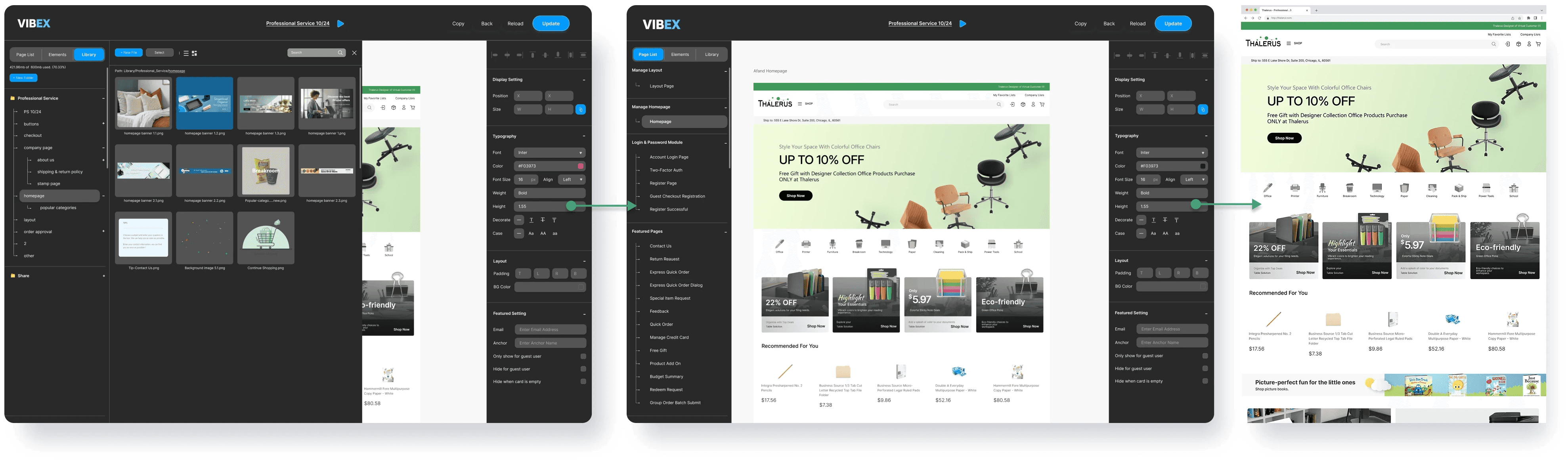
VIBEX operates as a structured system where layouts, page types, templates, and configurable elements work together to deliver scalable B2B storefronts. Each layer defines clear boundaries, ensuring flexibility without compromising business logic or system consistency.
The platform is built on three core components:
Page Types — standardize key business flows
Templates — enable scalable storefront delivery
Configurable Elements — connect the frontend to ERP and operational data
5. From Complexity to Control
As business complexity increased, the focus shifted from solving isolated problems to defining systems that could sustain growth. The work that followed was not about adding features, but about structuring complexity into reusable foundations — through architecture, flows, templates, and platform evolution.
Translating Business Complexity into Structural Frameworks
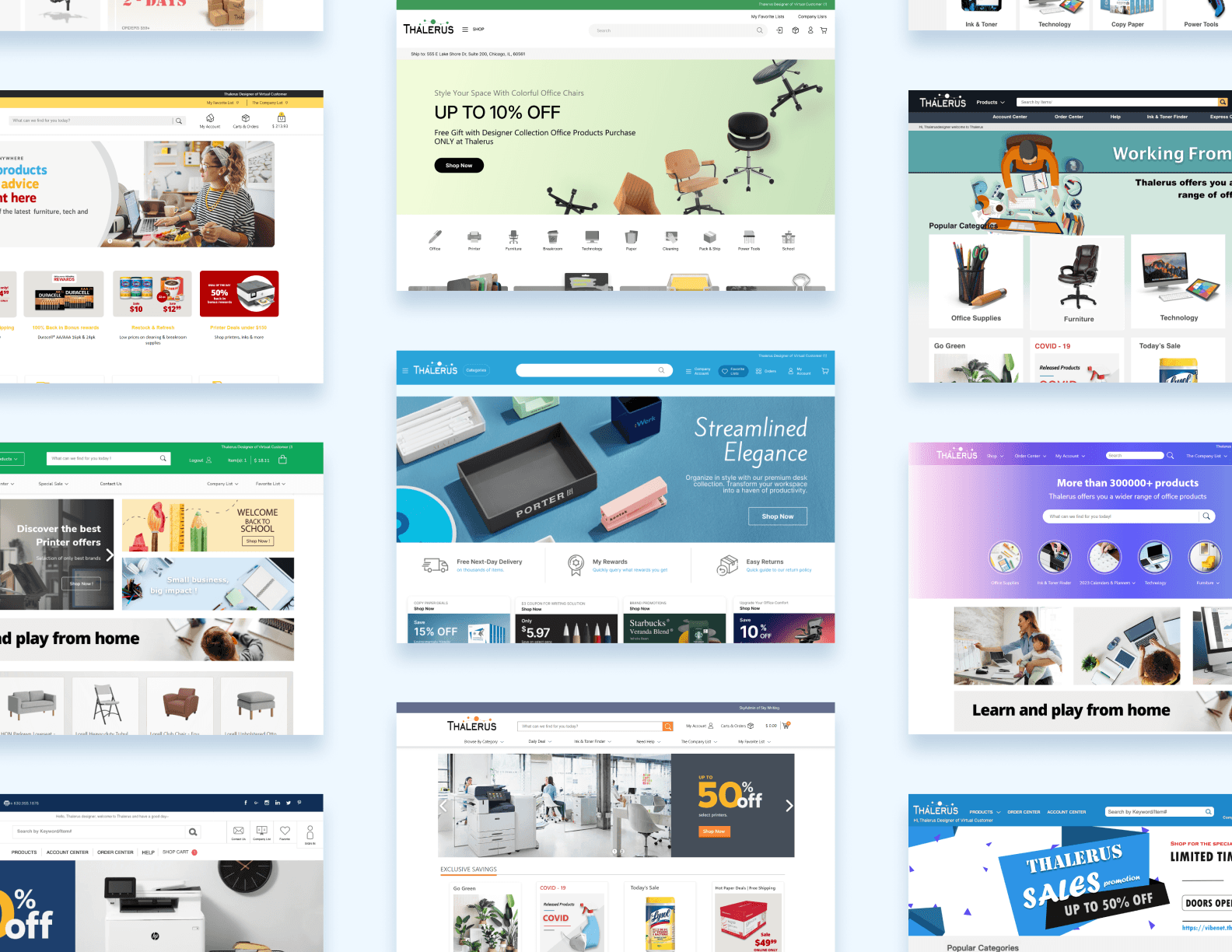
I transformed complex B2B requirements into reusable page structures by defining layout zones, information hierarchy, and structural boundaries. Instead of designing isolated screens, I established scalable page-type foundations that could support diverse dealer scenarios while maintaining consistency across the platform.
Designing Core Flows & Interaction Logic
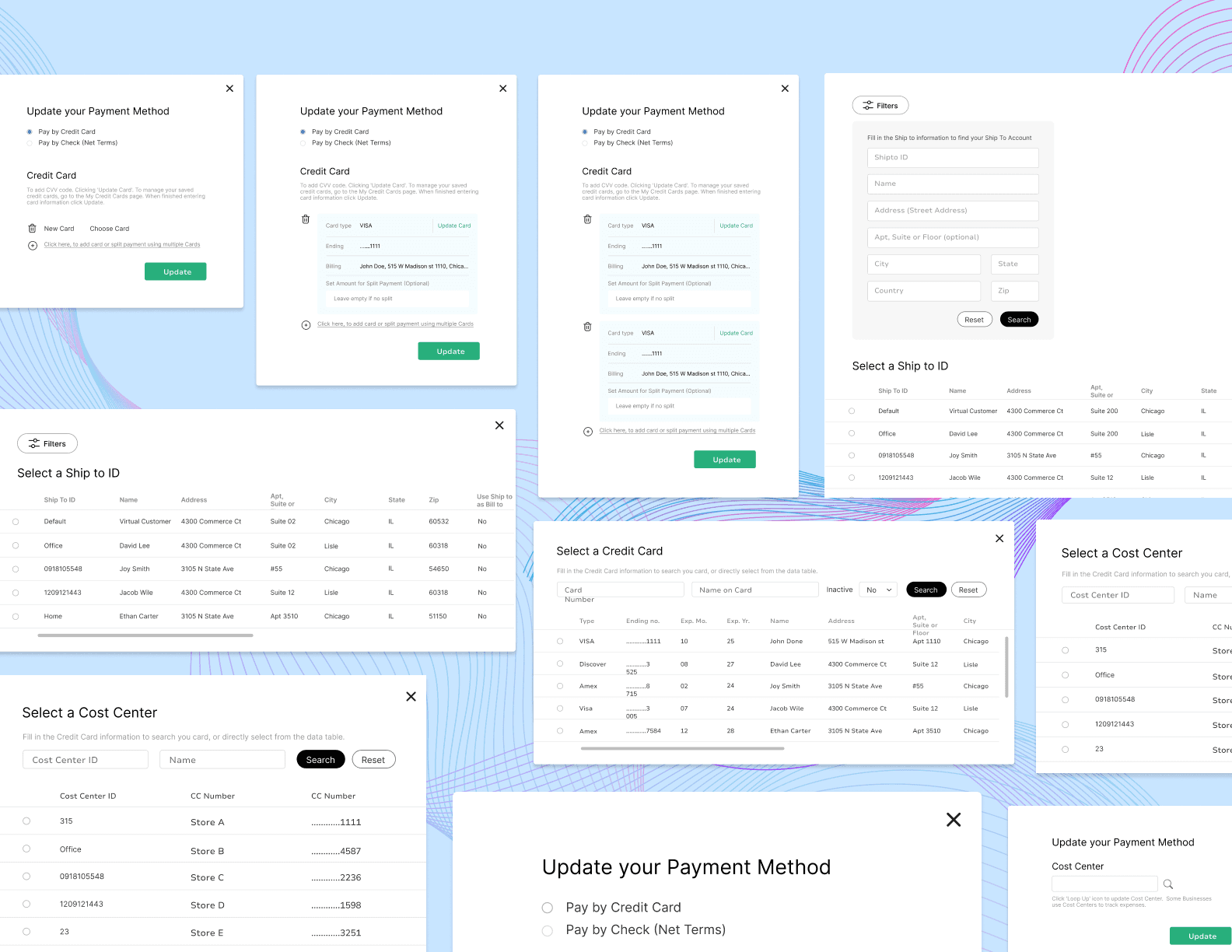
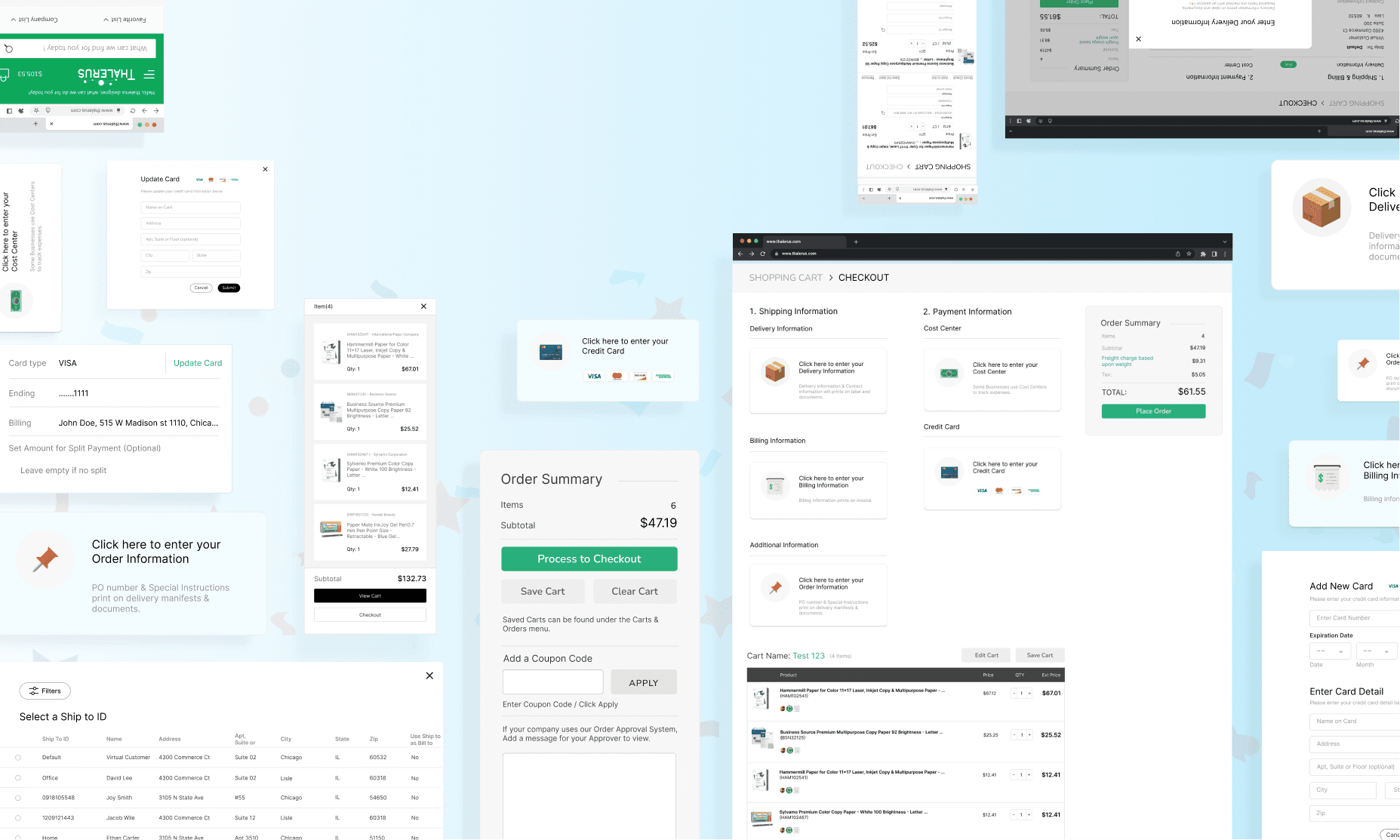
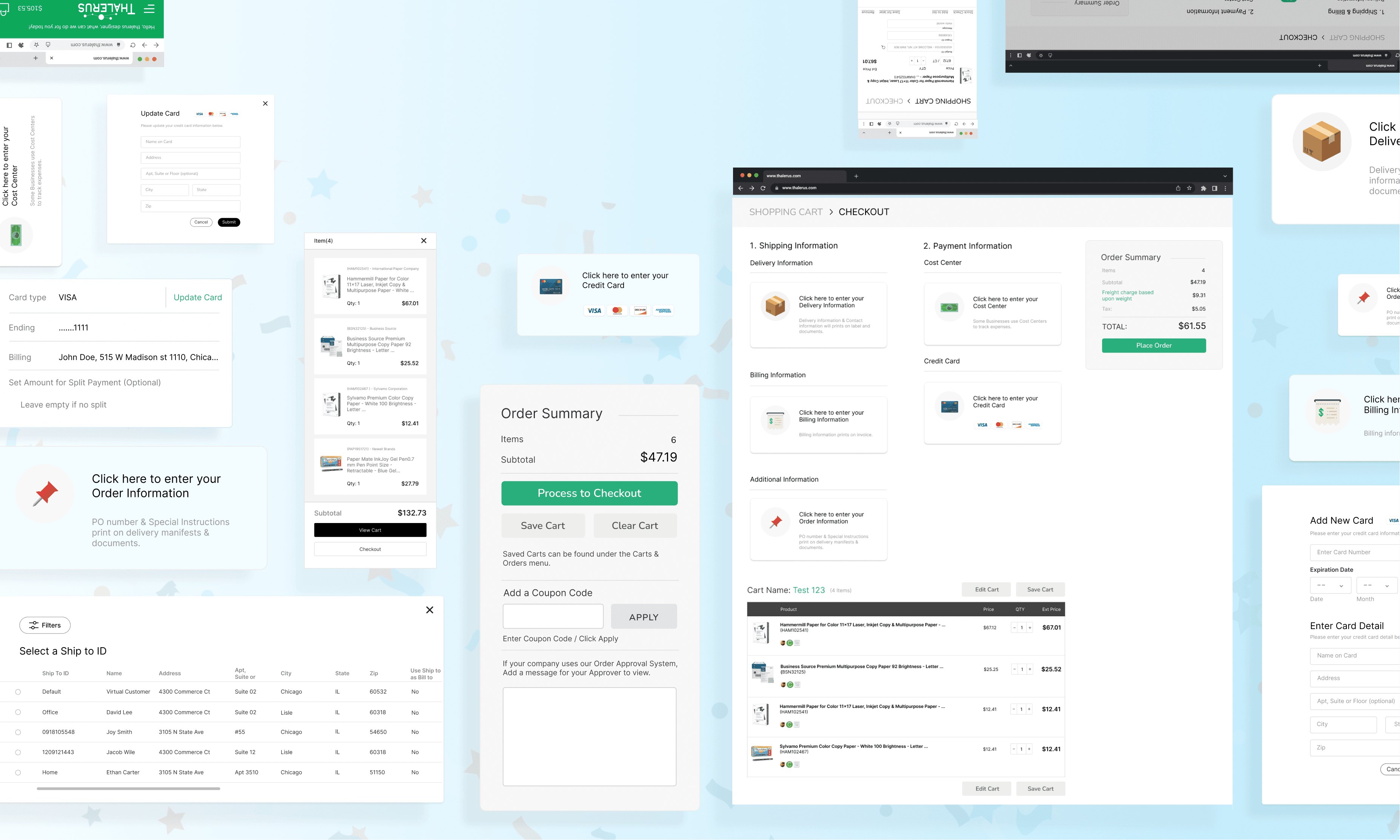
I designed and optimized key commerce flows — including login, cart, and checkout — translating backend business rules into clear, efficient user experiences. Each flow balanced operational accuracy with usability, ensuring complex purchasing logic remained intuitive for end users.
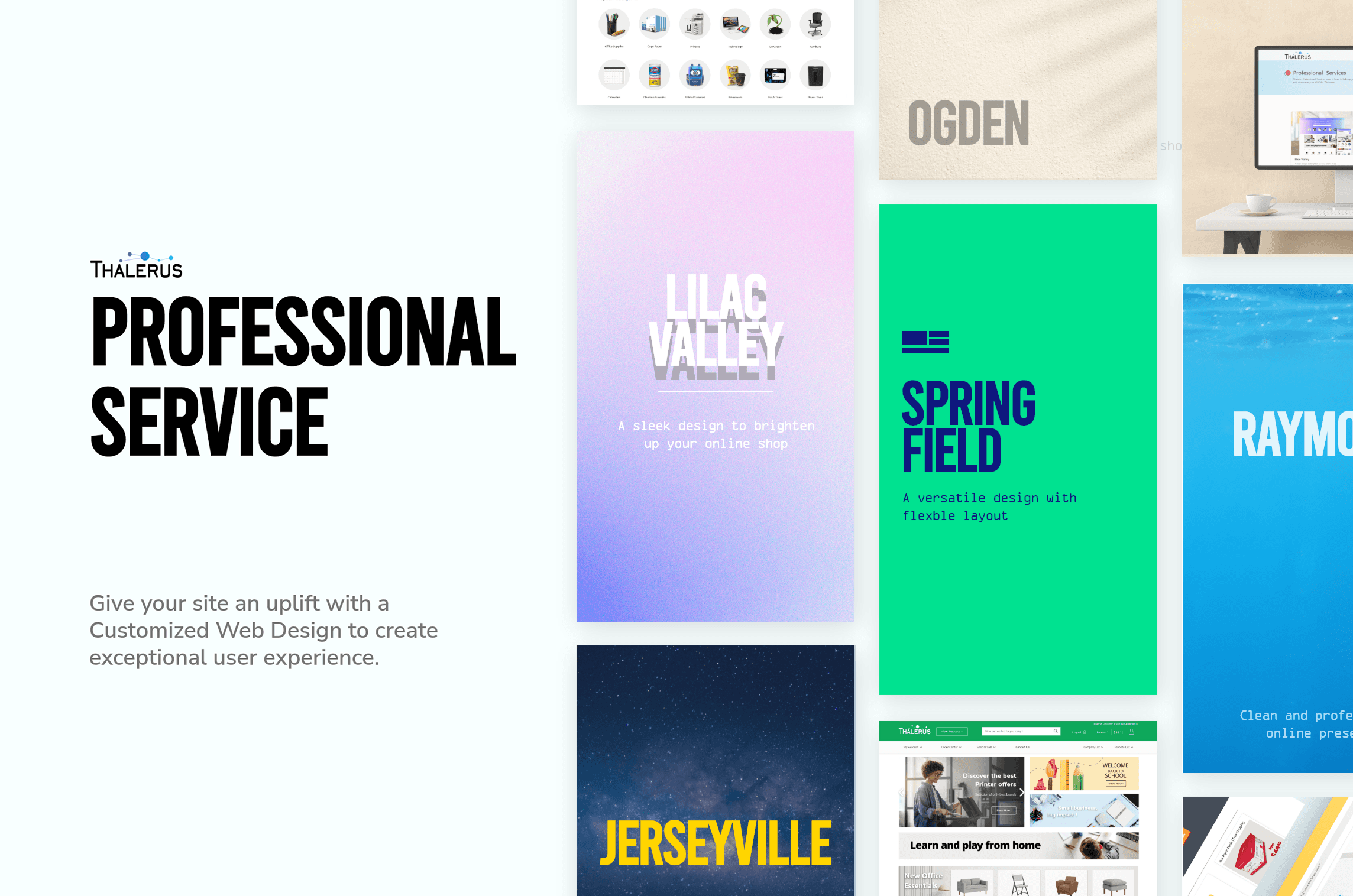
Building a Scalable Template System
I developed and maintained a reusable template library supporting multiple visual styles and client customizations. Within a unified business framework, these templates enabled brand differentiation without compromising structural integrity or core commerce functionality.

Contributing to Platform Evolution
I participated in the platform’s architectural evolution, including the transition to responsive design. Through real-world deployments and iterative refinement, I ensured new capabilities were not only technically viable but practically usable across dealer environments.
6. Key Design Decisions
Designing within a complex enterprise ecosystem required deliberate trade-offs. Every decision balanced flexibility, scalability, and long-term system integrity rather than short-term customization.
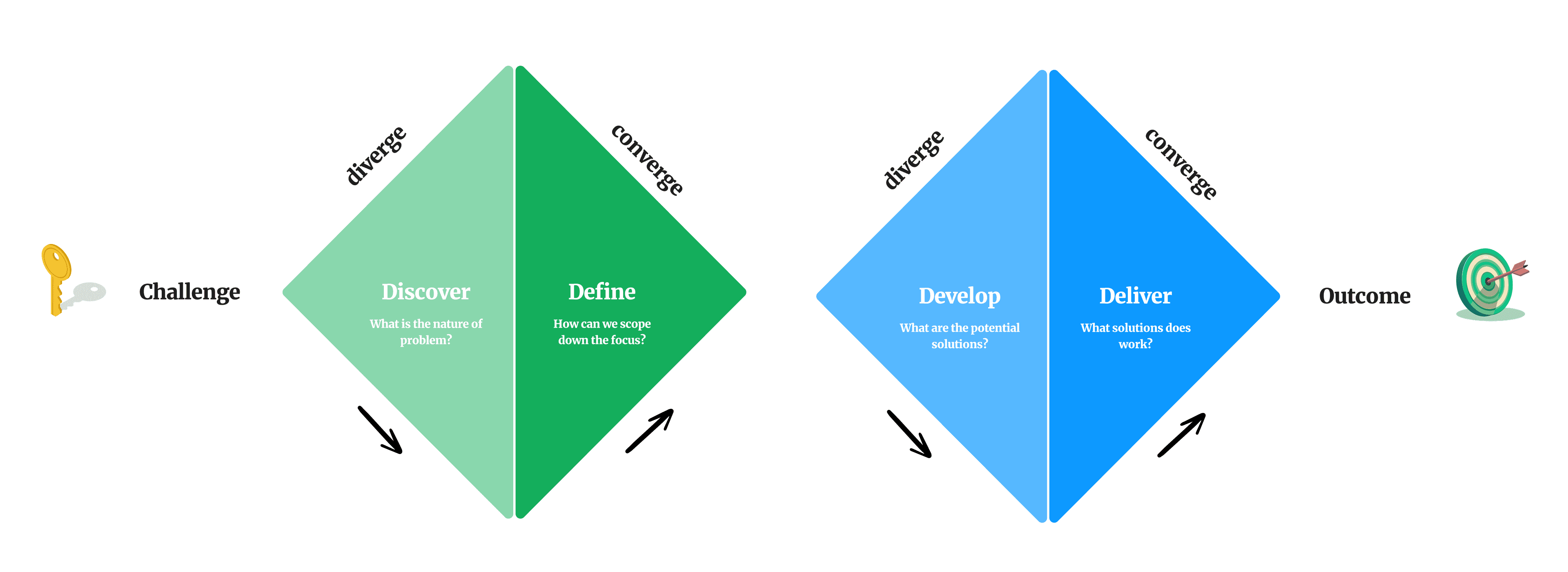
Key considerations included:
Flexibility vs. Consistency
Allowing dealer-level customization while maintaining a unified structural framework across the platform.
Configurability vs. Control
Defining clear boundaries for what could be adjusted and what must remain system-constrained to protect business logic.
Speed vs. Sustainability
Prioritizing reusable structures over one-off solutions to ensure long-term maintainability.
User Simplicity vs. Business Complexity
Translating intricate backend rules into interfaces that remain clear and manageable for end users.
7. Impact
The transition from fragmented customization to a structured platform model improved scalability, efficiency, and long-term maintainability across the ecosystem.
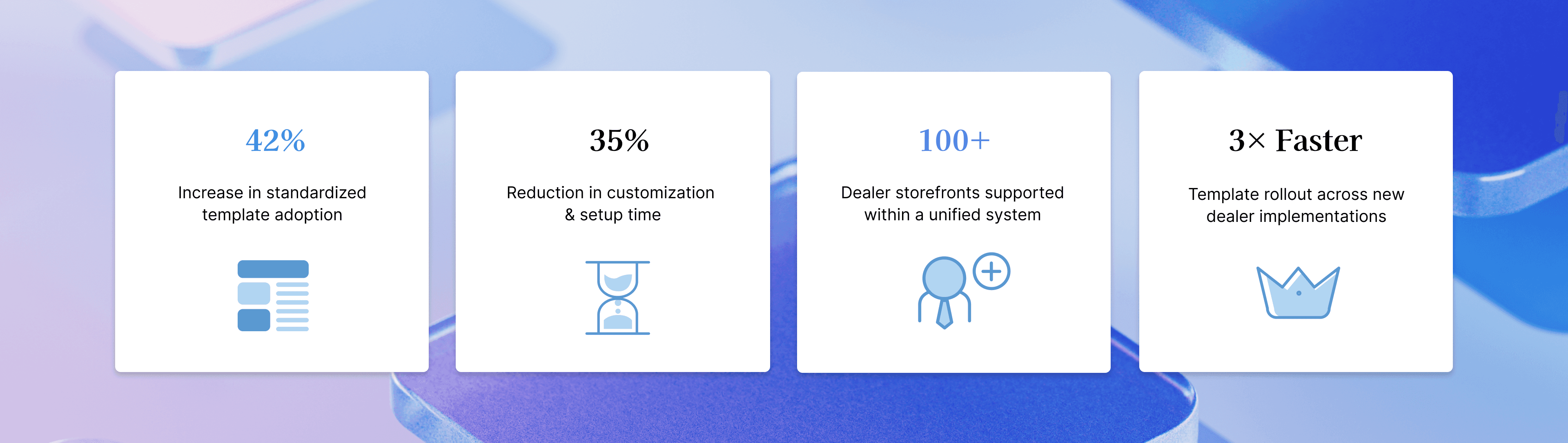
42% increase in standardized template adoption
35% reduction in customization and setup time
100+ dealer storefronts supported within a unified system architecture
By systemizing business logic and delivery structure, the platform enabled consistent growth without increasing operational complexity.

8. What I Learned
Through VIBEX, I learned that designing for enterprise systems is not about adding features — it is about structuring complexity into scalable, sustainable architecture.
This project reflects my ability to navigate intricate business environments and transform them into coherent, usable systems.

VIBEX — Enterprise B2B Commerce Platform Builder
Overview
VIBEX is a scalable no-code enterprise B2B commerce platform for building and managing multiple dealer storefronts within a unified SaaS and ERP ecosystem. It transforms business complexity into a structured, rule-based system that enables consistent and scalable storefront delivery.
Categories
Enterprise UX
Platform Design
B2B Commerce
System Architecture
My Role
Led the UX architecture and template system design, defining scalable layouts, core commerce flows, and configurable element standards.
Impact
Transitioned from custom site delivery to a scalable platform model, enabling measurable improvements in efficiency, consistency, and adoption.
Impact
42%
Increase in standardized template adoption
35%
Reduction in customization & setup time
100+
Dealer storefronts supported within the unified platform
1. What is VIBEX
As B2B commerce grew increasingly complex, traditional site-by-site customization led to inconsistent experiences and rising maintenance costs.
VIBEX was designed as a unified, responsive, and rule-based platform — enabling scalable templates, standardized commerce flows, and configurable elements to support long-term business growth.
2.1 Operating Within Enterprise Reality
B2B storefronts operate on top of enterprise ERP, SaaS, and supply chain systems.
All storefront data originates from centralized business systems rather than being independently built for the web.
Independent dealers share the same backend ecosystem while maintaining their own branded storefronts.
These businesses manage inventory, pricing rules, purchasing approvals, and logistics through unified enterprise infrastructure.
2.2 Complexity at the Core
B2B commerce requirements are highly varied, with complex workflows and multiple page types.
Storefronts must accurately and controllably reflect business rules and operational data.
In a multi-dealer environment, design, engineering, delivery, and maintenance must operate within a unified structural framework.
The platform must remain flexible for dealer customization while preserving system consistency.
3. Turning Complexity into Structure
As dealer requirements grew increasingly complex, the challenge was not simply building more features — it was defining a structure that could consistently support them. Instead of responding to each request with isolated customization, the focus shifted to designing a platform capable of translating business complexity into reusable system capabilities.
Through structural abstraction and rule definition, the platform transformed scattered requirements into a coherent framework:
Translated business capabilities into structured, configurable frontend modules.
Enabled flexible storefront configuration within a unified set of business rules and page structures.
Converted one-off custom design and implementation into reusable, maintainable platform components.
Preserved system consistency and business correctness while allowing brand differentiation across dealers.
Simplified complex B2B operations into clear, manageable experiences for users and dealers.
4. How the Platform Works
VIBEX operates as a structured system where layouts, page types, templates, and configurable elements work together to deliver scalable B2B storefronts. Each layer defines clear boundaries, ensuring flexibility without compromising business logic or system consistency.
The platform is built on three core components:
Page Types — standardize key business flows
Templates — enable scalable storefront delivery
Configurable Elements — connect the frontend to ERP and operational data
5. From Complexity to Control
As business complexity increased, the focus shifted from solving isolated problems to defining systems that could sustain growth. The work that followed was not about adding features, but about structuring complexity into reusable foundations — through architecture, flows, templates, and platform evolution.
Translating Business Complexity into Structural Frameworks
I transformed complex B2B requirements into reusable page structures by defining layout zones, information hierarchy, and structural boundaries. Instead of designing isolated screens, I established scalable page-type foundations that could support diverse dealer scenarios while maintaining consistency across the platform.
Designing Core Flows & Interaction Logic
I designed and optimized key commerce flows — including login, cart, and checkout — translating backend business rules into clear, efficient user experiences. Each flow balanced operational accuracy with usability, ensuring complex purchasing logic remained intuitive for end users.
Building a Scalable Template System
I developed and maintained a reusable template library supporting multiple visual styles and client customizations. Within a unified business framework, these templates enabled brand differentiation without compromising structural integrity or core commerce functionality.
Contributing to Platform Evolution
I participated in the platform’s architectural evolution, including the transition to responsive design. Through real-world deployments and iterative refinement, I ensured new capabilities were not only technically viable but practically usable across dealer environments.
6. Key Design Decisions
Designing within a complex enterprise ecosystem required deliberate trade-offs. Every decision balanced flexibility, scalability, and long-term system integrity rather than short-term customization.
Key considerations included:
Flexibility vs. Consistency
Allowing dealer-level customization while maintaining a unified structural framework across the platform.
Configurability vs. Control
Defining clear boundaries for what could be adjusted and what must remain system-constrained to protect business logic.
Speed vs. Sustainability
Prioritizing reusable structures over one-off solutions to ensure long-term maintainability.
User Simplicity vs. Business Complexity
Translating intricate backend rules into interfaces that remain clear and manageable for end users.
7. Impact
The transition from fragmented customization to a structured platform model improved scalability, efficiency, and long-term maintainability across the ecosystem.
42% increase in standardized template adoption
35% reduction in customization and setup time
100+ dealer storefronts supported within a unified system architecture
By systemizing business logic and delivery structure, the platform enabled consistent growth without increasing operational complexity.
8. What I Learned
Through VIBEX, I learned that designing for enterprise systems is not about adding features — it is about structuring complexity into scalable, sustainable architecture.
This project reflects my ability to navigate intricate business environments and transform them into coherent, usable systems.
VIBEX — Enterprise B2B Commerce Platform Builder
Overview
VIBEX is a scalable no-code enterprise B2B commerce platform for building and managing multiple dealer storefronts within a unified SaaS and ERP ecosystem. It transforms business complexity into a structured, rule-based system that enables consistent and scalable storefront delivery.
Categories
Enterprise UX
Platform Design
B2B Commerce
System Architecture
My Role
Led the UX architecture and template system design, defining scalable layouts, core commerce flows, and configurable element standards.
Impact
Transitioned from custom site delivery to a scalable platform model, enabling measurable improvements in efficiency, consistency, and adoption.
Impact
42%
Increase in standardized template adoption
35%
Reduction in customization & setup time
100+
Dealer storefronts supported within the unified platform
1. What is VIBEX
As B2B commerce grew increasingly complex, traditional site-by-site customization led to inconsistent experiences and rising maintenance costs.
VIBEX was designed as a unified, responsive, and rule-based platform — enabling scalable templates, standardized commerce flows, and configurable elements to support long-term business growth.
2.1 Operating Within Enterprise Reality
B2B storefronts operate on top of enterprise ERP, SaaS, and supply chain systems.
All storefront data originates from centralized business systems rather than being independently built for the web.
Independent dealers share the same backend ecosystem while maintaining their own branded storefronts.
These businesses manage inventory, pricing rules, purchasing approvals, and logistics through unified enterprise infrastructure.
2.2 Complexity at the Core
B2B commerce requirements are highly varied, with complex workflows and multiple page types.
Storefronts must accurately and controllably reflect business rules and operational data.
In a multi-dealer environment, design, engineering, delivery, and maintenance must operate within a unified structural framework.
The platform must remain flexible for dealer customization while preserving system consistency.
3. Turning Complexity into Structure
As dealer requirements grew increasingly complex, the challenge was not simply building more features — it was defining a structure that could consistently support them. Instead of responding to each request with isolated customization, the focus shifted to designing a platform capable of translating business complexity into reusable system capabilities.
Through structural abstraction and rule definition, the platform transformed scattered requirements into a coherent framework:
Translated business capabilities into structured, configurable frontend modules.
Enabled flexible storefront configuration within a unified set of business rules and page structures.
Converted one-off custom design and implementation into reusable, maintainable platform components.
Preserved system consistency and business correctness while allowing brand differentiation across dealers.
Simplified complex B2B operations into clear, manageable experiences for users and dealers.
4. How the Platform Works
VIBEX operates as a structured system where layouts, page types, templates, and configurable elements work together to deliver scalable B2B storefronts. Each layer defines clear boundaries, ensuring flexibility without compromising business logic or system consistency.
The platform is built on three core components:
Page Types — standardize key business flows
Templates — enable scalable storefront delivery
Configurable Elements — connect the frontend to ERP and operational data
5. From Complexity to Control
As business complexity increased, the focus shifted from solving isolated problems to defining systems that could sustain growth. The work that followed was not about adding features, but about structuring complexity into reusable foundations — through architecture, flows, templates, and platform evolution.
Translating Business Complexity into Structural Frameworks
I transformed complex B2B requirements into reusable page structures by defining layout zones, information hierarchy, and structural boundaries. Instead of designing isolated screens, I established scalable page-type foundations that could support diverse dealer scenarios while maintaining consistency across the platform.
Designing Core Flows & Interaction Logic
I designed and optimized key commerce flows — including login, cart, and checkout — translating backend business rules into clear, efficient user experiences. Each flow balanced operational accuracy with usability, ensuring complex purchasing logic remained intuitive for end users.
Building a Scalable Template System
I developed and maintained a reusable template library supporting multiple visual styles and client customizations. Within a unified business framework, these templates enabled brand differentiation without compromising structural integrity or core commerce functionality.
Contributing to Platform Evolution
I participated in the platform’s architectural evolution, including the transition to responsive design. Through real-world deployments and iterative refinement, I ensured new capabilities were not only technically viable but practically usable across dealer environments.
6. Key Design Decisions
Designing within a complex enterprise ecosystem required deliberate trade-offs. Every decision balanced flexibility, scalability, and long-term system integrity rather than short-term customization.
Key considerations included:
Flexibility vs. Consistency
Allowing dealer-level customization while maintaining a unified structural framework across the platform.
Configurability vs. Control
Defining clear boundaries for what could be adjusted and what must remain system-constrained to protect business logic.
Speed vs. Sustainability
Prioritizing reusable structures over one-off solutions to ensure long-term maintainability.
User Simplicity vs. Business Complexity
Translating intricate backend rules into interfaces that remain clear and manageable for end users.
7. Impact
The transition from fragmented customization to a structured platform model improved scalability, efficiency, and long-term maintainability across the ecosystem.
42% increase in standardized template adoption
35% reduction in customization and setup time
100+ dealer storefronts supported within a unified system architecture
By systemizing business logic and delivery structure, the platform enabled consistent growth without increasing operational complexity.
8. What I Learned
Through VIBEX, I learned that designing for enterprise systems is not about adding features — it is about structuring complexity into scalable, sustainable architecture.
This project reflects my ability to navigate intricate business environments and transform them into coherent, usable systems.
More works


Let’s bring something extraordinary to life!
All rights reserved,
JINDA ©2026
Let’s bring something extraordinary to life!
All rights reserved,
JINDA ©2026
Let’s bring something extraordinary to life!
All rights reserved,
JINDA ©2026